From CES to Glastonbury, the events that dominate feeds aren't the ones with the biggest budgets. They're the ones that planned content from the start.
We were somewhere between a soundcheck in Hamburg and a load-in in Amsterdam when it became obvious that the way most large events handle visual content is fundamentally broken. Not the intent. The structure.
Big productions spend months on logistics, talent, production design and marketing. Then, somewhere in the final weeks, content becomes a line item. A photographer gets hired. Maybe a videographer. The brief is vague, the access is limited, and the results reflect that. Meanwhile the event itself is extraordinary.
What Coachella, CES and the big European festivals figured out
The events that consistently generate the most visual impact aren't the ones with the biggest budgets. They're the ones that treat content as part of the production from day one. Coachella doesn't produce great content by accident. Neither does Glastonbury, or Tomorrowland, or any major tech convention that you've seen dominate feeds during and after its run.
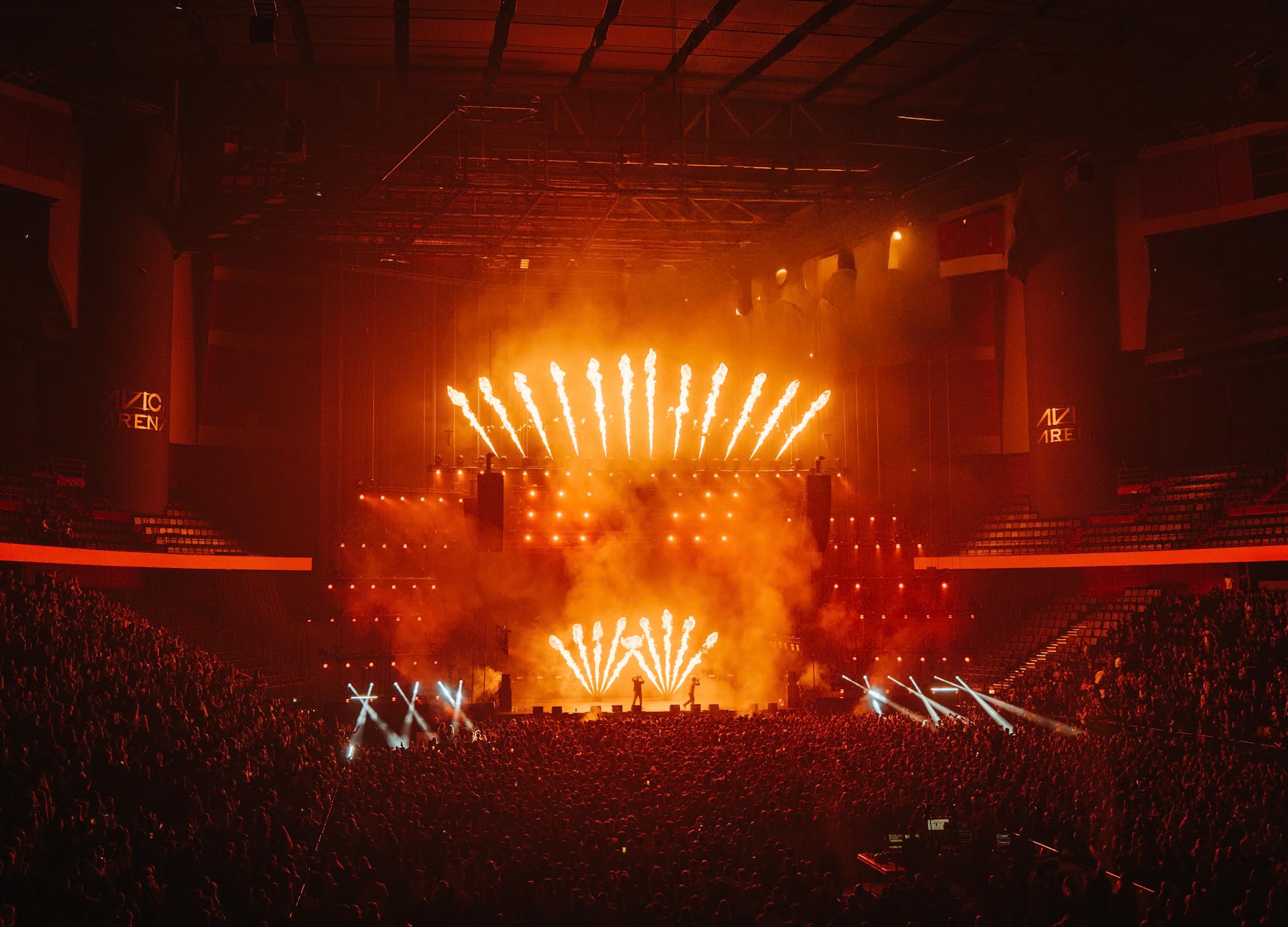
The drone footage that opens a CES recap. The multicam cut that captures a headline set from six angles simultaneously. The 60-second short that's online before the crowd has left the venue. None of that happens without a production team that was in the room long before showtime and built the content workflow around the event, not on top of it.
The logistics of operating internationally
Every country has its own airspace regulations. Operating a drone over a crowd in Germany is a different process than doing it in France, the UK, or the US. We've navigated enough of these to know that the certification side is just preparation. You either have it sorted before you land or you're grounded.
The same goes for multicam productions at scale. Equipment needs to be in the right country, cleared through the right channels, with the right crew who know how the setup works before the first rehearsal. Experience here isn't a differentiator, it's a baseline requirement.
Four years on the road
Touring with artists for the past four years has been the best education we could have asked for. You learn very quickly what content actually resonates versus what looks impressive in a brief. You learn that the moments audiences respond to are rarely the ones that were planned. And you learn to be ready for all of it, all the time, regardless of what city you woke up in.
If you're producing something at scale, anywhere in Europe or beyond, and you want a content team that has genuinely done this before, we'd like to hear about it.
Related reading: Four Years Inside Tomorrowland · A Decade of International Production · 9 Cameras, 10,000 People: Avicii Arena